Start with a Bloomington-specific building assessment
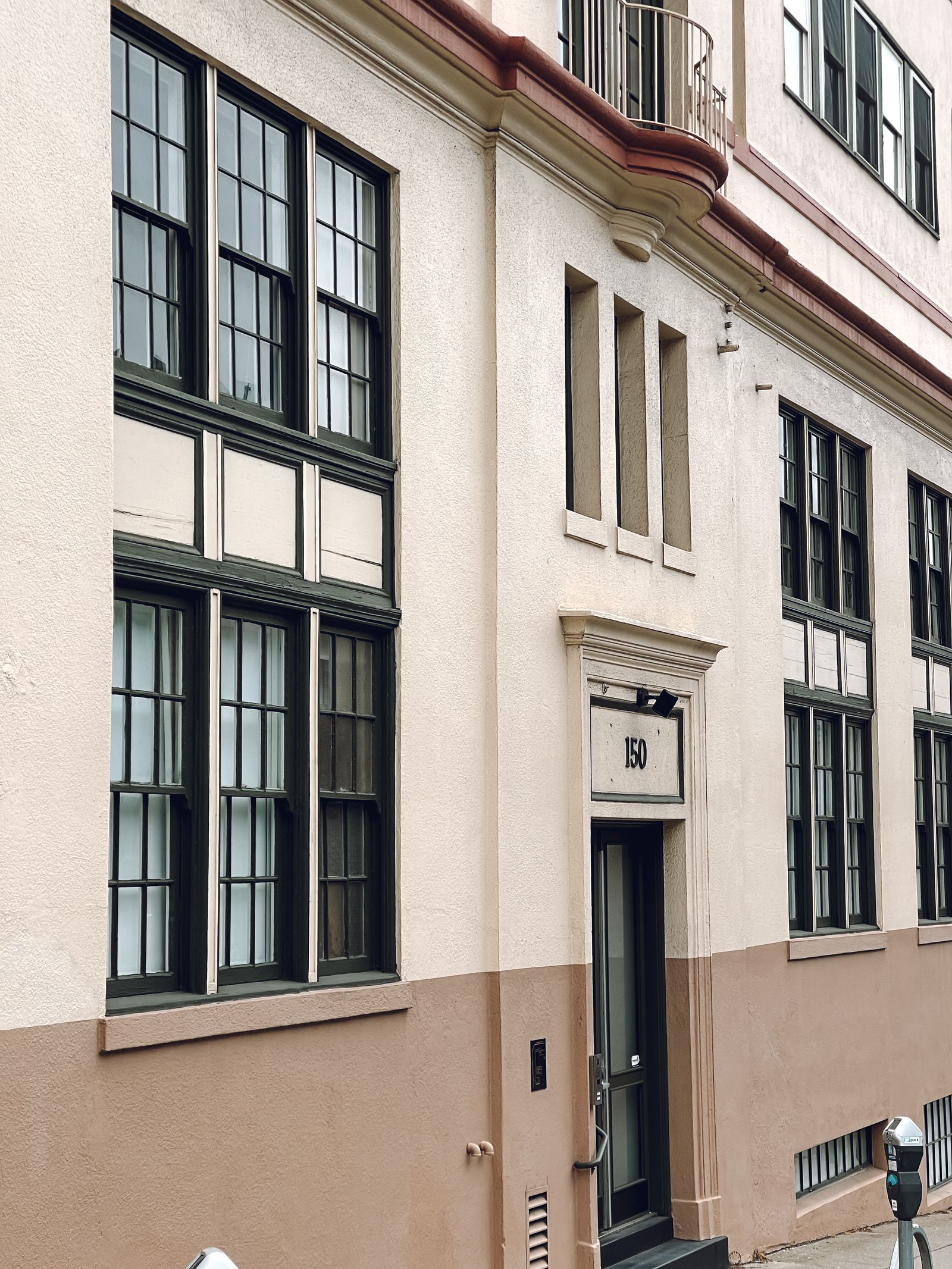
Bloomington commercial properties often combine brick, mortar, Indiana limestone, precast concrete, painted block, glass, metal panels, stucco, EIFS, awnings, sealants, and later additions. A downtown building may place historic-looking masonry beside storefront glazing and narrow sidewalks. A North Walnut office or medical property may have a covered entrance, accessible paths, landscaping, and HVAC equipment close to the wall. A retail building near College Mall may add signs, tenant doors, parking lanes, cart areas, and shared stormwater routes. The same chemical or pressure approach should not be assumed to fit every elevation.
Soft washing may suit compatible organic growth, pollen accumulation, mildew-like staining, bird residue, and some atmospheric film when the product, dwell time, rinse, and protection plan fit the material. A dark mark may instead be mineral residue, oxidation, winter salt, exhaust film, embedded soil, failed paint, or a recurring water path. The proposal should identify likely conditions, representative test areas, included elevations, expected improvement, and limitations. Routine washing is not a repair for open joints, cracked limestone, leaking roof edges, spalled concrete, failed sealant, corrosion, or failing coatings.
- Separate limestone, brick, mortar, concrete, glass, metal, EIFS, stucco, painted, and coated zones.
- Distinguish organic staining from minerals, oxidation, salt residue, exhaust film, and drainage marks.
- Use representative test areas where repairs, coatings, or material history are uncertain.
- Keep restoration, glass polishing, leak diagnosis, and repair work outside routine washing.
Build the scope around Bloomington corridors
Downtown Bloomington work may involve active sidewalks, restaurants, offices, hotels, civic destinations, event activity, deliveries, and limited staging. A clean entry might support a tenant transition, seasonal appearance refresh, or recurring maintenance plan, but the work still has to preserve pedestrian movement, accessible routes, business access, and emergency paths. A property contact can identify the most visible elevations, event dates, delivery windows, restricted doors, and the hours when a quieter phase is possible.
North Walnut and other office and medical corridors can require careful coordination around patient arrivals, employee traffic, accessible drop-offs, air intakes, cameras, service doors, and landscaping. The scope should map hose routes, barriers, spotters, entry protection, and a pause point if a patient, visitor, vehicle, or unexpected wind enters the work zone. A medical or office context is a planning consideration only; this route makes no claim about contracts, affiliations, or endorsements.
College Mall and nearby retail properties can combine storefront glass, signs, awnings, sidewalks, parking fields, landscaped islands, drive lanes, and multiple tenants. Work may need to phase by facade, protect merchandise-facing entries, keep fire lanes and accessible routes open, and finish before customer peaks. Properties near Indiana University may also experience student move-in, game-day, event, or academic-calendar traffic. The practical approach is to ask the site contact for dates and operating constraints, rather than assume an institutional schedule or relationship.
Plan for limestone, humidity, pollen, and storms
Indiana limestone deserves a measured evaluation. It can appear alongside brick, mortar, concrete, metal, and repaired sections that react differently to chemistry, moisture, dwell, and pressure. A test area can help identify whether the visible condition is organic growth, mineral deposition, weathering, efflorescence, or a coating problem. The cleaning plan should protect joints, openings, glazing, metal, signage, landscaping, and adjacent finishes while recognizing that a wash cannot reverse erosion or rebuild a damaged surface.
Bloomington's humid periods, shade, tree pollen, rain, and thunderstorms can make some elevations stay damp and collect residue. Winter adds snow, deicing salt, freeze-thaw movement, and tracked soil at entries and lower walls. A shaded north-facing wall may dry differently from a sunlit parking-side elevation. The work window should consider forecast, wind, lightning, rain probability, surface temperature, humidity, drying time, pedestrian activity, and whether a storm could dilute a solution or redirect rinse water.
Recurring staining can be a useful building clue. A downspout, parapet cap, planter, irrigation head, condensation point, failed joint, or roof-edge detail may keep one section wet. Cleaning can improve the visible appearance, but the proposal should distinguish appearance work from investigation or repair. That helps the owner decide whether a cleaner, roofer, mason, painter, plumber, or building-envelope professional should handle the next step.
Include access and runoff in the quote
Access can determine the practical sequence. Downtown staging may be narrow, while a retail lot may be busy with cars, carts, deliveries, signs, and neighboring tenants. An office or medical building may have rooftop units, canopies, trees, security controls, and accessible paths. Before work begins, identify staging, water access, lift or pole locations, hose routes, barriers, spotters, doors, air intakes, vehicles, emergency lanes, and the person authorized to pause work.
Parking lots and sidewalks may send rinse water toward curb inlets, swales, detention features, ramps, basement entries, or pavement joints. A storm drain is not automatic permission for treated water to enter it. Controls depend on product, soil, rinse volume, slope, drain type, landscaping, and site requirements. Depending on the scope, planning may involve diversion, recovery, reduced water, filtration, plant protection, disposal, or coordination with the responsible authority. The quote should state assumptions and describe what happens if observed flow differs from the site review.
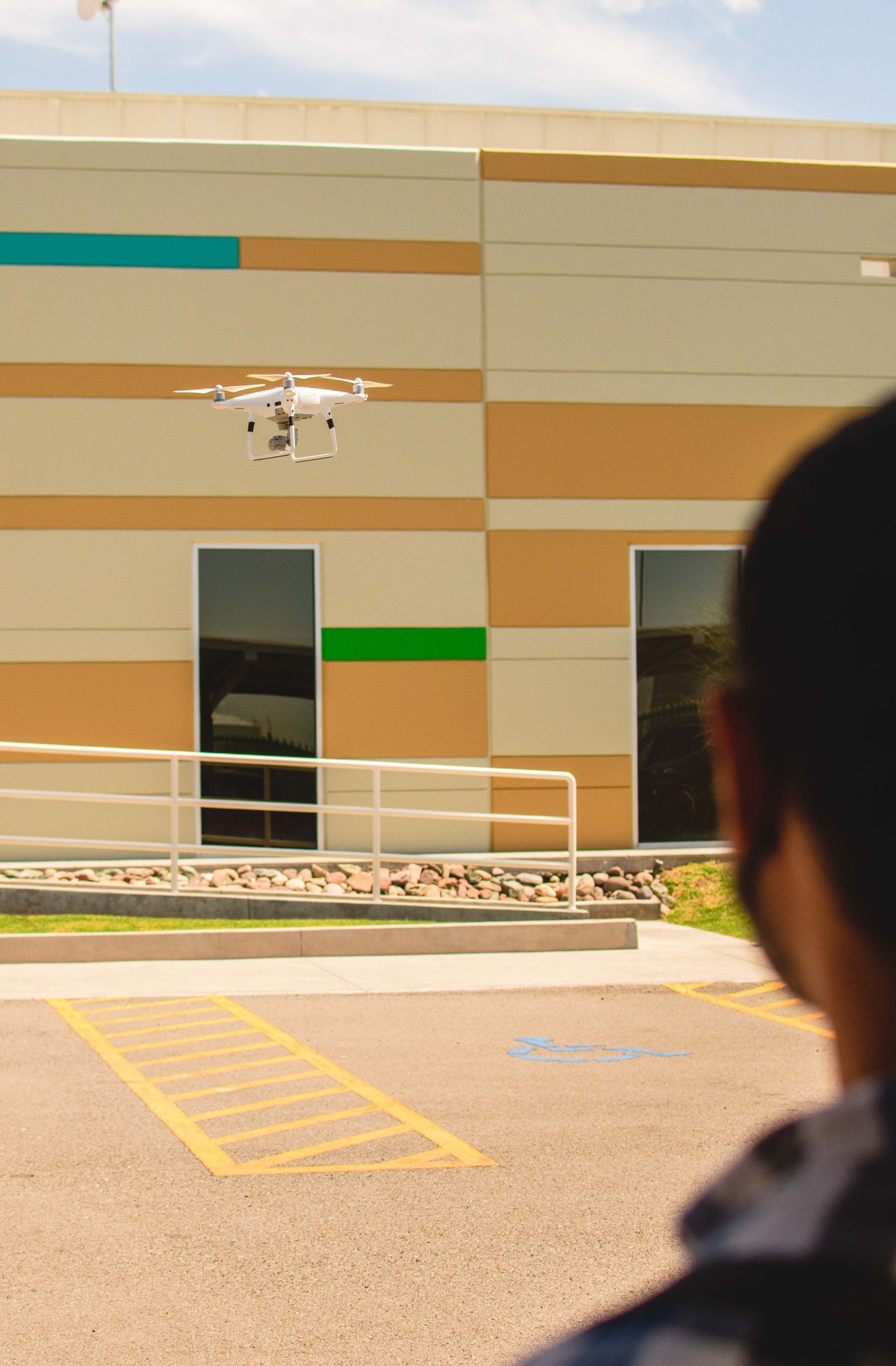
Drone assistance may be considered for suitable broad upper elevations only when facade compatibility, wind, stand-off distance, launch and recovery space, visual control, public separation, airspace, security, and ground coordination support it. It does not replace hand detailing, contact glass cleaning, close condition assessment, or repair work. Near dense downtown routes, active roads, or Indiana University-adjacent activity, the actual property review matters. If aerial controls are not adequate, a pole, lift, ground, or hybrid plan may be preferable.
Make the Bloomington quote easy to approve
A useful quote connects the requested appearance to the way the facility operates. State whether the goal is an event-ready entry, recurring maintenance, tenant turnover, a property sale, removal of a particular stain, or an improvement to selected elevations. List the building materials, included faces, test areas, access equipment, working hours, weather contingencies, protection, runoff assumptions, documentation, and exclusions. For a busy site, phasing can limit the number of entrances, drive lanes, or loading areas controlled at one time.
Send the address, building use, approximate height, facade materials, problem elevations, desired timing, operating hours, water access, nearby drains, access limits, and known leaks, loose material, coating failures, salt exposure, or previous cleaning damage. Photos of the main entry, shaded wall, upper wall, roof edge, loading area, windows, landscaping, and parking-side drainage help prepare the review. Include delivery, tenant, patient, visitor, student, event, security, or snow-removal constraints when they affect the work window.
To discuss a Bloomington property, call +1 239-351-2897 or email contact@dronebuildingcleaners.com. Drone Building Cleaners can help you get in touch, review whether soft washing, controlled pressure, aerial assistance, or a hybrid method fits the building, and prepare a quote around the outcome you need. The right scope is specific about elevations, access, protection, weather, drainage, limitations, and work that belongs to another trade.